

Different brand names may catch your eye in UK pharmacies once Exemestane has been prescribed for you. Among these, Xtane 25 is used for specific types of breast cancer, offering an alternative name for the same active treatment.
Quick Overview: Exemestane
- Requires a formal clinical assessment and prescription from a registered UK medical practitioner before dispensing.
- The therapy belongs to a distinct classification of oncology medicine known as aromatase inhibitors.
- The treatment typically lowers circulating systemic oestrogen levels within days of starting the therapeutic regimen.
- Clinical data demonstrate a significant reduction in long-term breast oncology recurrence rates after tamoxifen therapies.
What Is Xtane 25?
Xtane 25 is a hormone therapy medicine used primarily in postmenopausal women. 25mg of Exemestane is contained within each tablet, placing this medicine firmly within the aromatase inhibitor (AI) drug group.
| Feature | Details |
|---|---|
| Drug Class | Aromatase Inhibitor |
| Active Ingredient | Exemestane |
| Primary Use | Hormone-sensitive breast cancer |
| Strength | 25mg |
| UK Reference Brand | Aromasin |
How Exemestane Works in the Body
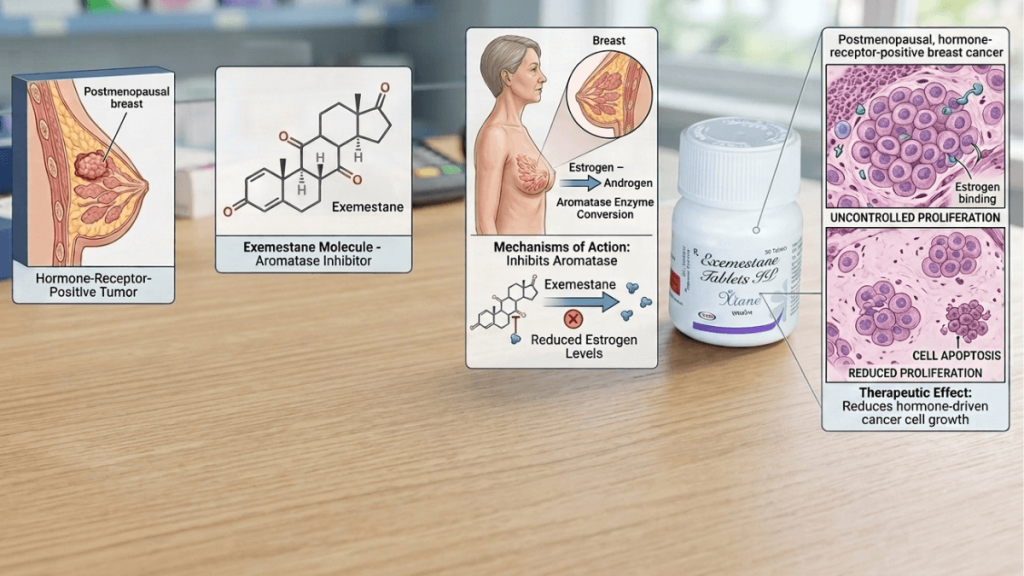
Because aromatase is the enzyme responsible for converting other hormones into oestrogen in postmenopausal women, Exemestane works by blocking it directly. Oestrogen levels circulating in the body are consequently lowered once this enzyme is inhibited. Because some breast cancer cells require oestrogen to grow, reducing these levels helps manage the disease.
When Doctors Prescribe Xtane 25
Clinicians prescribe this treatment based on specific clinical needs.
Common clinical indications include:
- Treatment of early breast cancer in postmenopausal women.
- Adjuvant treatment following an initial course of tamoxifen.
- Management of advanced breast cancer after other hormone therapies.
Benefits of Xtane 25
This advanced pharmacological treatment offers significant clinical advantages in postmenopausal oncology care. By precisely inhibiting enzymes, it delivers highly predictable reductions in active oestrogen levels. This biochemical control directly minimises the risk of local or systemic disease recurrence.
The therapy significantly improves long-term disease-free survival in many postmenopausal patients. It provides an alternative pathway when patients experience resistance to traditional first-line treatments. This adaptability allows your clinical team to maintain continuous, effective therapeutic pressure against abnormal cells.
Furthermore, the treatment helps stabilise patient wellness protocols during the extended maintenance phase. It works consistently over prolonged intervals without requiring complex intra-hospital administration procedures. This predictable profile helps individuals maintain their daily routines whilst undergoing essential clinical care.
Possible Side Effects
During treatment, side effects are sometimes experienced, meaning any concerns you notice should be flagged promptly to your clinical team.
| Type | Side Effect |
|---|---|
| Common | Hot flushes |
| Common | Fatigue or feeling tired |
| Common | Joint pain |
| Common | Nausea or increased sweating |
| Serious | Loss of bone density (osteoporosis) |
| Serious | Significant changes in mood |
Please report any suspected side effects via the MHRA Yellow Card scheme.
Important Safety Advice
Safety requires careful medical supervision. Always consult your oncology team or GP.
Where liver impairment is present, this medicine should be used cautiously, with your clinical team kept fully informed. Your clinician will assess your hepatic function.
Those with kidney disease also require dosage monitoring. With your clinical team, your complete medical history should always be discussed openly.
Given that alcohol can intensify fatigue or dizziness, it is wise to limit intake whilst on this treatment.
Driving or operating machinery should be avoided whenever dizziness sets in.
Use of this medicine during pregnancy is not appropriate. It may harm a foetus. It is also not authorised for breastfeeding women.
When Should You Speak to a Doctor?
You must contact your clinical care team immediately if severe complications manifest. Watch for signs of deep vein thrombosis, such as sudden calf swelling or localised heat. Unexplained breathlessness or sharp chest pain demands immediate emergency medical evaluation.
Schedule a prompt appointment if joint or bone pain becomes severely debilitating. Your practitioner can investigate your bone mineral density to prevent advanced osteoporotic fractures. Skin or eye changes that persist should not be ignored. Professional advice should always be sought, as this could signal an underlying issue.
Acute allergic reactions are treated as emergencies. This is because symptoms can worsen quickly and turn life-threatening within minutes. If this is suspected, emergency medical care must be sought immediately. Symptoms include swelling of the oral cavity, face, lips, or throat tissues. Worsening psychological symptoms like profound depression also require prompt discussion with your GP.
Can Xtane Be Used With Other Medicines?
Certain pharmaceutical compounds can alter the therapeutic efficiency of this oncology treatment. Medicines that contain oestrogen will directly counteract the beneficial enzyme-blocking action of this drug. Avoid health supplements containing phytoestrogens, as they can interfere with your clinical progress.
Potent hepatic enzyme inducers can accelerate the clearance of this active medicine. Drugs like rifampicin, phenytoin, or carbamazepine can lower required systemic drug levels significantly. Your clinician will review your complete prescription profile to prevent these hidden interactions.
Always inform your local pharmacist before starting any over-the-counter remedial options. Even herbal products like St John’s Wort can alter how your body processes oncology therapies. Regular professional consultations protect your health and preserve the integrity of your primary treatment plan.
Storage and Handling Advice
Store this medicine securely within its original manufactured outer protective packaging. Keeping the tablets inside the blister film protects the active molecules from damage caused by ambient moisture. Maintain the storage environment below 30°C to ensure chemical stability over time.
Keep all prescription packages entirely out of the sight and reach of children. Store the product in a locked cabinet or elevated storage area to ensure safety. Do not use the medicine beyond the explicit expiry date printed on the carton.
Dispose of unwanted or expired tablets responsibly through a pharmacy return scheme. Never dispose of medical waste in domestic refuse bins or communal wastewater networks. These responsible steps help protect local environments and keep public communities safe.
Accessing Treatment Responsibly
Always obtain your medicines from regulated pharmacy sources. This guarantees product authenticity. Treatment decisions for breast cancer are highly complex. Always consult your oncology team or prescribing specialist.
Frequently Asked Questions
Q: What is the use of Xtane Tablet?
A: For postmenopausal women, hormone receptor-positive breast cancer is the condition Xtane is designed to treat. It contains exemestane, an aromatase inhibitor. It lowers oestrogen levels, slowing cancer growth. Precisely as directed by your doctor, this medicine should be taken at all times.
Q: Is Xtane a steroid?
A: Xtane contains exemestane, a steroidal aromatase inhibitor. It’s structurally steroid-based but doesn’t work like typical steroids. Oestrogen production is blocked by this medicine rather than muscle growth being supported, so it holds no place in bodybuilding or
performance enhancement.
Q: How does Xtane affect bone density?
A: Xtane lowers oestrogen, which can reduce bone density over time. Because bone density can be affected over time, longer-term use may carry a higher risk of fracture. Doctors often monitor bone health during treatment. Calcium and vitamin D may be advised.
Conclusion
Xtane 25 is a well-established treatment specifically designed for patients dealing with hormone-sensitive breast cancer. Through professional monitoring by healthcare providers, patients can ensure both their safety and the clinical success of their treatment. Always adhere to the prescribed programme for optimal results.
References
Medical Disclaimer
This article is for informational purposes only and does not replace professional medical advice. Always consult a registered healthcare professional before starting or changing any treatment before starting or changing treatment.