
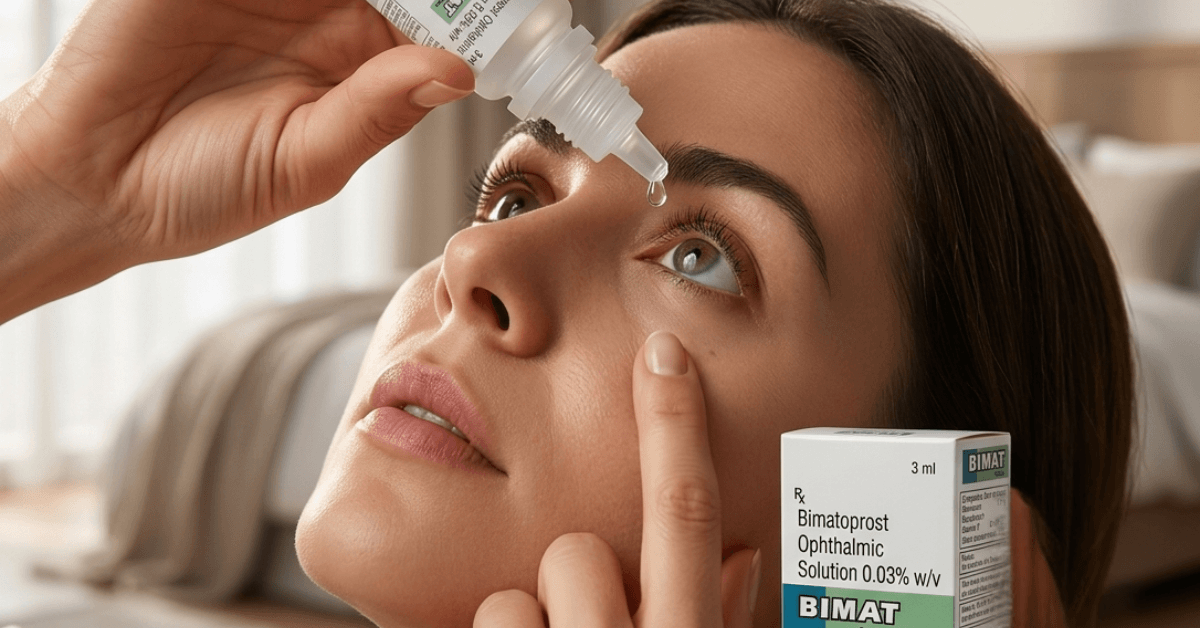
Bimat Eye Drops 0.03%: Bimatoprost Protects Vision
Bimat Eye Drops contain bimatoprost 0.03%, a prostaglandin analogue used to lower raised intraocular pressure. Open-angle glaucoma and ocular hypertension are the two principal conditions for which Bimat Eye Drops are prescribed. By improving fluid drainage from the eye, they protect the optic nerve and help prevent long-term vision loss with consistent daily use.
When Bimat Eye Drops are prescribed, it is natural for patients to seek a clearer understanding of how the treatment functions. Unfamiliarity with the brand name often prompts a closer look at what the treatment involves.
The medicine is a prescription medicine in the UK. Learn how it works, its benefits, side effects, and safety advice. Bimatoprost serves as the active ingredient in Bimat Eye Drops, which reduce raised pressure inside the eye.
You may notice different brand names in UK pharmacies, such as Lumigan. All contain the same active ingredient, bimatoprost, and work in the same clinically established way.
Raised intraocular pressure is a serious concern for many people across the UK. Because raised intraocular pressure left without treatment places sustained strain on the optic nerve, permanent vision loss can result over time. Bimat Eye Drops are one treatment option that UK ophthalmologists prescribe as part of a structured, long-term care plan.
What Are Bimat Eye Drops?

Bimat Eye Drops are sterile ophthalmic solutions used to manage intraocular pressure (IOP—the pressure inside the eye). They are available only on prescription in the UK.
They belong to the prostaglandin analogue drug class. By enhancing the eye’s natural fluid drainage, this class of medicines actively lowers intraocular pressure.
| Medicine Detail | Information |
|---|---|
| Brand Name | Bimat Eye Drops |
| Active Ingredient | Bimatoprost 0.03% w/v |
| Drug Class | Prostaglandin Analogue |
| Prescription Status | Prescription-Only Medicine (POM) |
| Therapeutic Use | Glaucoma and Ocular Hypertension |
| UK Reference Brand | Lumigan |
| Dosage Form | Sterile Ophthalmic Solution |
Before Bimat Eye Drops are prescribed, a thorough assessment of the patient’s eye health and IOP readings is carried out by the ophthalmologist. Treatment forms part of a broader plan to protect your vision over the long term.
How Bimatoprost Works in the Body
Bimatoprost works by activating prostaglandin F2-alpha receptors (specialised cell receptors in the eye that regulate fluid drainage). A greater volume of aqueous humour — the clear fluid circulating within the eye — is allowed to drain, which reduces the build-up of pressure.
When this fluid drains more effectively, the pressure inside the eye falls. Because the optic nerve transmits visual signals from the eye to the brain, sustained raised IOP poses a serious risk to long-term sight.
By keeping IOP within a clinically safe range, bimatoprost helps protect the optic nerve from progressive damage. It does not cure glaucoma but manages it effectively with consistent use.
The pressure-lowering effect begins within a few hours of application. Peak IOP reduction typically occurs around eight to twelve hours after use.
Learn more about bimatoprost medicines and how prostaglandin analogue treatments support long-term eye health.
When Doctors Prescribe Bimat Eye Drops
Ophthalmologists prescribe bimatoprost when a patient has raised intraocular pressure that requires treatment. Open-angle glaucoma and ocular hypertension represent the principal conditions for which Bimat Eye Drops are clinically indicated. In open-angle glaucoma, partial blockage of the eye’s drainage channels causes IOP to climb gradually — often with no symptoms detectable in the early stages.
Ocular hypertension is raised IOP without current optic nerve damage. Because ocular hypertension that goes untreated carries a substantially elevated risk of progressing to glaucoma, early intervention is clinically important.
Bimat Eye Drops may also be prescribed when other IOP-lowering medicines have not achieved adequate pressure control. Your ophthalmologist will decide the most appropriate treatment based on your full clinical assessment.
Benefits of Bimat Eye Drops
Bimat Eye Drops effectively lower raised intraocular pressure when applied as directed. This is the primary therapeutic goal in managing both glaucoma and ocular hypertension.
By reducing IOP, bimatoprost helps protect the optic nerve from the gradual damage caused by sustained pressure. This can slow or prevent the progressive loss of visual field over time.
For patients with ocular hypertension, early treatment with bimatoprost can delay or prevent the onset of glaucoma. Protecting the optic nerve before damage occurs is a key clinical priority.
Once-daily application makes Bimat Eye Drops straightforward to incorporate into a daily routine. Consistent evening use supports stable pressure control throughout the day and night.
Regular ophthalmological reviews allow your specialist to monitor whether IOP remains within a safe target range. Treatment adjustments can be made promptly if needed.
Alternative Medicine Doctors May Consider
Individual health needs actively shape the choice of alternative IOP-lowering medicines considered by the prescribing doctor. Beta-blockers such as timolol are commonly used as a first-line alternative.
Rather than enhancing drainage, carbonic anhydrase inhibitors such as dorzolamide work by reducing the amount of aqueous humour produced within the eye. They are sometimes combined with prostaglandin analogues for additional pressure control.
Alpha-2 agonists such as brimonidine reduce both fluid production and improve outflow. Where other medicines prove insufficient or are not tolerated, alternative options may be introduced.
The selection is guided by the ophthalmologist, who takes into account eye health, medical history, and how the patient has responded to previous treatment.
Possible Side Effects
Like any medicine, side effects may be experienced with Bimat Eye Drops. Most are mild and affect the eye locally rather than the whole body.
| Side Effect | Type | Action Required |
|---|---|---|
| Mild eye irritation or burning after application | Common | Monitor; inform doctor if persistent |
| Conjunctival redness (redness of the white of the eye) | Common | Monitor; inform doctor if persistent |
| Watery or itchy eyes | Common | Monitor; inform doctor if persistent |
| Dryness of the eye surface | Common | Monitor; inform doctor if persistent |
| Gradual eyelash growth or thickening | Common | Monitor; discuss with doctor at next appointment |
| Slight darkening of the eyelid skin | Common | Monitor; discuss with doctor at next appointment |
| Increased iris pigmentation (permanent darkening of eye colour) | Less Common | Inform doctor promptly |
| Eye inflammation — uveitis (swelling inside the eye) | Less Common | Contact doctor without delay |
| Significant or sudden changes in vision | Less Common | Seek urgent medical attention immediately |
| Severe allergic reactions — swelling, skin rash, or breathing difficulty | Less Common — Serious | Call 999 or go to A&E immediately |
Stop using Bimat Eye Drops immediately if you develop severe eye irritation, vision loss, or facial swelling. Seek urgent medical attention without delay.
Contact your GP if you notice difficulty breathing or significant swelling of the face or throat. Call 999 or attend your nearest A&E immediately if such symptoms arise.
Important Safety Advice
Drug interactions
Before treatment begins, the ophthalmologist must be informed of all medicines currently being taken. This includes other eye drops, systemic medicines, vitamins, and herbal remedies.
Because applying two different eye drops in rapid succession can cause one to wash out the other before absorption is complete, a gap of at least five minutes between applications is required.
Alcohol
Alcohol has no direct interaction with Bimat Eye Drops. However, excessive alcohol intake may worsen ocular dryness or irritation in some patients.
Medical conditions to disclose
Tell your doctor if you have any of the following before starting Bimat Eye Drops:
- A history of eye surgery or intraocular inflammation
- Macular oedema — a condition involving swelling at the back of the eye — has been reported as a rare but serious side effect of bimatoprost.
- Liver or kidney impairment
- A known allergy to bimatoprost or any prostaglandin analogue
- Any other eye condition not previously discussed with your clinician
Contact lens wearers
Before Bimat Eye Drops are applied, contact lenses must be removed. A minimum of fifteen minutes should pass before reinsertion, because the preservative benzalkonium chloride is capable of being absorbed by soft lenses, which can lead to irritation.
Pregnancy and breastfeeding
Do not use Bimat Eye Drops during pregnancy without explicit medical advice. Limited human safety data are available. Use only if the potential benefit clearly outweighs the risk to the unborn baby.
Speak to your doctor before using these drops whilst breastfeeding. Although systemic absorption is low, caution is still advised.
Driving and operating machinery
Because bimatoprost can cause temporary blurred vision in the moments immediately following application, driving or operating machinery must be avoided until full visual clarity has returned.
Reporting side effects
Report any unexpected side effects through the MHRA Yellow Card Scheme at yellowcard.mhra.gov.uk.
Reporting through the MHRA Yellow Card Scheme actively supports ongoing medicine safety monitoring. Because safe prescribing depends on individual clinical assessment, any decision to start or change eye treatment must involve consultation with a registered healthcare professional.
When Should You Speak to a Doctor?
Contact your doctor or ophthalmologist promptly if you experience any of the following:
- Contact your GP if you notice severe or worsening eye pain that fails to resolve, or sudden and significant changes in your vision or visual field.
- Persistent redness that does not improve with continued use
- Tell your doctor if you have or have had any of the following: signs of an allergic reaction such as swelling, rash, or intense irritation
- New or worsening sensitivity to light
- No noticeable improvement in IOP after consistent treatment
Because stopping treatment without clinical guidance can cause IOP to rise rapidly, Bimat Eye Drops must not be discontinued without first speaking to the prescribing clinician.
Contact NHS 111 or attend your nearest A&E if you suspect a serious side effect or unexpected reaction or experience sudden vision loss.
Using Bimat Eye Drops Alongside Other Medicines
Bimat Eye Drops can sometimes be used alongside other IOP-lowering medicines under medical supervision. Your ophthalmologist will advise whether combination treatment is appropriate for your case.
Always inform your eye specialist about every medicine you use. This includes over-the-counter eye drops, vitamins, and herbal products.
Apply eye drops in the order prescribed by your clinician. Leave at least 5 minutes between applications to allow full absorption and maximum effectiveness.
Before any new medicine is introduced alongside Bimat Eye Drops, advice should be sought from the pharmacist, who can identify potential interactions and advise accordingly.
Storage and Handling Advice
Store Bimat Eye Drops at room temperature, below 25°C, away from direct sunlight and sources of heat. Original packaging must be retained at all times to protect the drops from damage.
Because accidental ingestion of eye drops by children or pets can cause serious harm, all medicines must be kept well out of their reach at all times. Never store them in a bathroom or near a kitchen sink where moisture can affect the solution.
Before each application, the expiry date printed on the pack should be checked to confirm the drops remain safe to use. Do not use drops that have passed their expiry date or have been open for more than four weeks.
Opened or expired eye drops should be returned to a local pharmacy for safe disposal. Do not place them in household waste or pour them down the sink.
Sharing eye drops with another person introduces a risk of infection and cross-contamination and must therefore be avoided entirely.
Responsible Access to Treatment
Bimat Eye Drops are a prescription-only medicine (POM). You must obtain medicine with a valid prescription from a registered healthcare professional. Supply without a valid prescription is not permitted under UK law.
Glaucoma and ocular hypertension are diagnosed and managed by ophthalmologists and specialist optometrists. A prescription must follow a thorough clinical eye examination.
Before any eye treatment is started or changed, consultation with a registered UK healthcare professional is essential. Never use another person’s eye drops, even if they appear to contain the same active ingredient.
FAQs
Q: What is the use of Bimat eye drops?
A: Raised intraocular pressure is lowered by Bimat Eye Drops, which are indicated for open-angle glaucoma and ocular hypertension. They protect the optic nerve and help prevent vision loss.
Q: What are the side effects of Bimat?
A: Among the side effects reported most frequently by patients using Bimat Eye Drops are eye irritation, redness, and watering. Because delayed reporting of severe or persistent symptoms can allow conditions to worsen, the prescribing doctor must be contacted promptly where these arise.
Q: How quickly do Bimat eye drops work?
A: Bimat Eye Drops begin lowering eye pressure within a few hours. The peak effect occurs around 8 to 12 hours after use. Full benefit develops over several weeks of consistent use.
Conclusion
Containing bimatoprost 0.03% as the active ingredient, Bimat Eye Drops lower raised intraocular pressure in patients diagnosed with glaucoma or ocular hypertension. Daily use maintains safe pressure control whilst protecting the optic nerve. Regular eye check-ups monitor treatment efficacy and any side effects. Consult your GP, ophthalmologist, or pharmacist for concerns.
References
- NHS. (2024). Glaucoma. Available at: www.nhs.uk
- National Institute for Health and Care Excellence (NICE). (2022). Glaucoma: diagnosis and management. NG81. Available at: www.nice.org.uk
- Medicines and Healthcare products Regulatory Agency (MHRA). Yellow Card Scheme. Available at: www.yellowcard.mhra.gov.uk
Medical Disclaimer
This article is for informational purposes only and does not replace professional medical advice. Always consult a registered healthcare professional before starting or changing any treatment. If you have concerns about your symptoms or medicines, speak to your GP, ophthalmologist, or a registered pharmacist.