
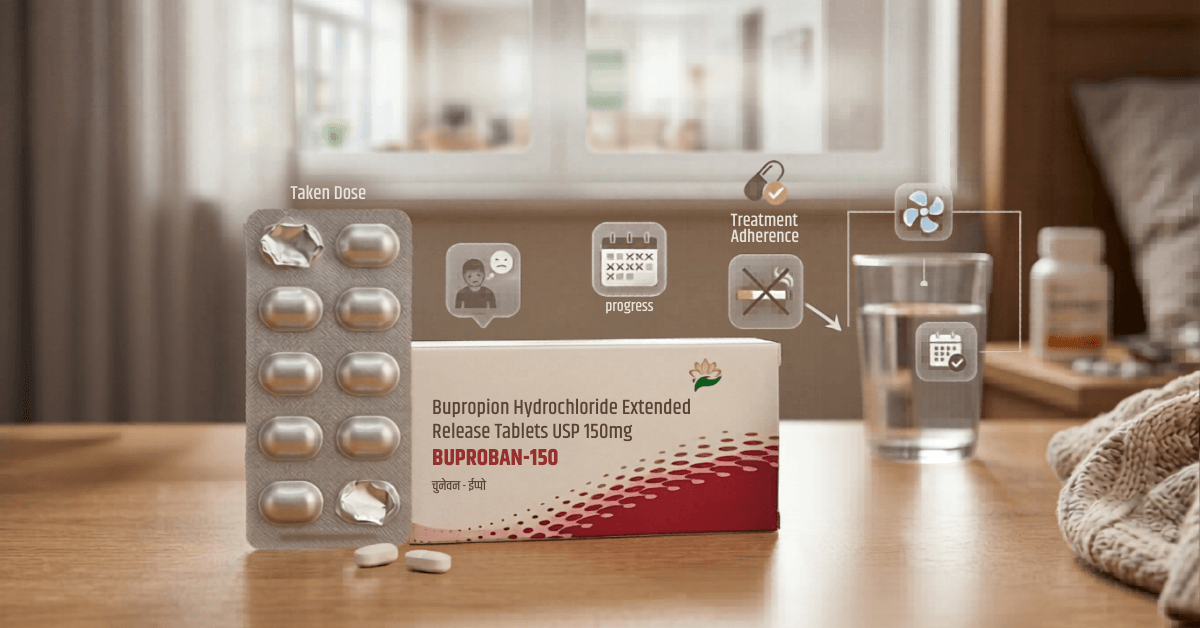
Buproban 150 Bupropion: Depression to Quit Smoking
Buproban 150 is a prescription-only medicine containing 150mg of Bupropion. Among the conditions most commonly treated by this medicine, major depressive disorder and seasonal affective disorder are clinically prominent. Because it reduces nicotine cravings, it is also prescribed to support patients who are working toward stopping smoking. Classified within the norepinephrine-dopamine reuptake inhibitor (NDRI) group, it acts on brain chemistry in a distinctly targeted way.
Different brand names may be encountered when Bupropion is dispensed through regulated UK pharmacies, which is completely normal as they contain the same active ingredient. Zyban 150 is one such brand.
Many patients feel uncertain when they see an unfamiliar name on their prescription. Understanding what your medicine does helps you use it safely and confidently.
Buproban 150 is prescribed for two distinct clinical purposes. Your doctor may prescribe it for depression or to support smoking cessation, depending on your medical needs.
What Is Buproban 150?
Buproban 150 is a prescription-only medicine (POM) containing 150mg of Bupropion. Formulated as an extended-release tablet, it is designed so that the active ingredient is delivered steadily across the day rather than all at once.
Being an atypical antidepressant of the NDRI class, its mechanism sets it apart from more conventional antidepressant approaches.
In the UK, the reference brand for Bupropion is Zyban, used specifically for smoking cessation. Buproban 150 contains the same active ingredient at the same strength.
Key Medicine Information
| Parameter | Details |
|---|---|
| Brand Name | Buproban 150 |
| Active Ingredient | Bupropion 150mg |
| Drug Class | Norepinephrine-Dopamine Reuptake Inhibitor (NDRI) |
| Tablet Form | Extended-Release (ER) Tablet |
| Prescription Status | Prescription-Only Medicine (POM) |
| UK Reference Brand | Zyban |
| Primary Uses | Depression, Smoking Cessation |
How Bupropion Works in the Body
Bupropion works by affecting two key chemical messengers in the brain. These are dopamine and norepinephrine (chemicals that carry signals between nerve cells).
In people with depression, levels of these neurotransmitters (brain chemicals) are often lower than normal. Bupropion prevents the brain from reabsorbing them too quickly. This keeps dopamine and norepinephrine active for longer, helping to stabilise mood.
In smoking cessation, the same mechanism plays a different role. Nicotine triggers dopamine release, which creates cravings. Bupropion partially mimics this effect without nicotine. The urge to smoke is reduced and withdrawal symptoms are eased through its action on dopamine and norepinephrine pathways.
Serotonin levels are not significantly affected by Bupropion, which distinguishes it from many other antidepressants. Because serotonin is largely uninvolved in its mechanism, a side effect profile distinct from SSRIs (selective serotonin reuptake inhibitors) is produced.
When Doctors Prescribe Buproban 150
Buproban 150 is prescribed across two main therapeutic areas. Your doctor will select it based on your specific clinical needs.
Major Depressive Disorder (MDD)
Persistent low mood, reduced energy, and loss of interest in daily activities are the hallmark features of major depressive disorder. Bupropion is prescribed when other antidepressants have not worked well. It is also considered when weight gain or sexual dysfunction from other antidepressants is a concern.
Seasonal Affective Disorder (SAD)
Reduced daylight during autumn and winter months is associated with seasonal affective disorder (SAD), a recognised form of depression. Bupropion is one of the medicines doctors consider for SAD management. Its energy-enhancing properties make it particularly relevant for this condition.
Smoking Cessation
Bupropion is a clinically recognised aid for stopping smoking. Physical withdrawal symptoms and nicotine cravings that accompany smoking cessation are both reduced through this medicine’s pharmacological action. A treatment start date of one to two weeks before the planned quit date is typically recommended to allow the medicine to reach effective levels.
Benefits of Buproban 150
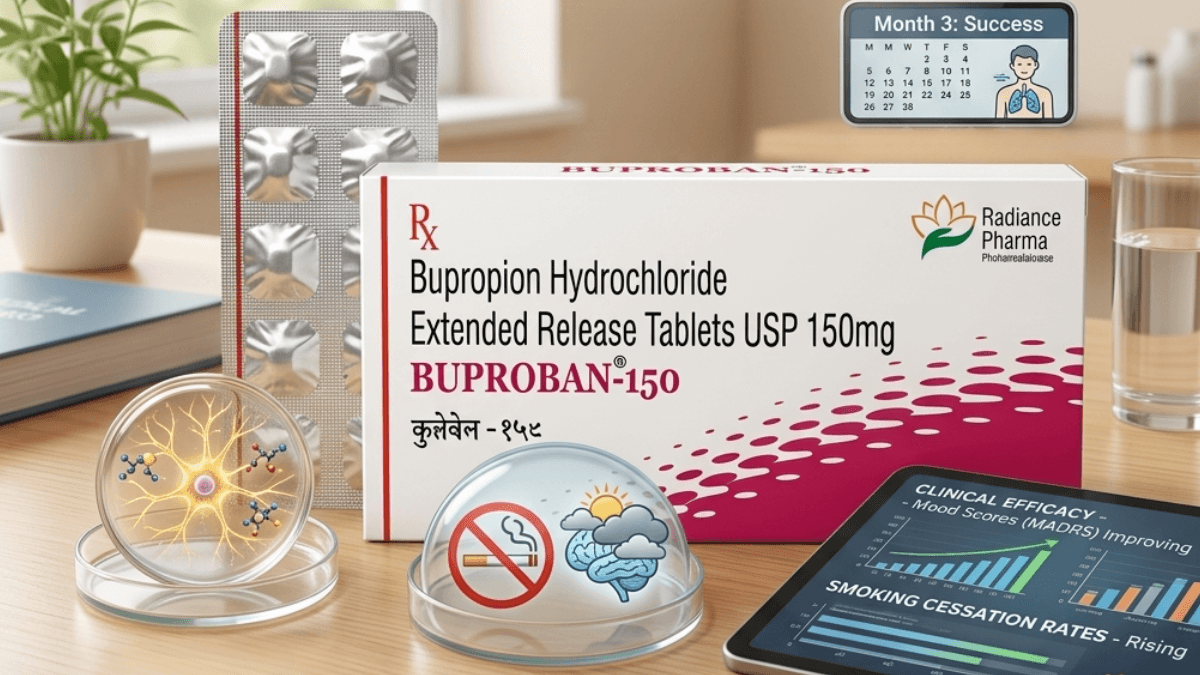
Buproban 150 offers several clinically relevant benefits. These are based on its pharmacological action and established therapeutic use.
Mood and Energy Improvement
In patients with depression, improvements in mood, concentration, and energy levels are observed with Bupropion use. Many antidepressants cause fatigue and sedation. Bupropion’s stimulating profile makes it better suited to patients experiencing low energy and concentration difficulties.
Lower Risk of Weight Gain
Weight gain is a commonly reported concern with many antidepressants. Bupropion has a more neutral effect on body weight. Modest weight reduction is experienced by some patients, which makes it a clinically preferred choice for certain patient profiles.
Sustained Release Formulation
The extended-release format of Buproban 150 provides consistent medicine levels throughout the day. This reduces the frequency of dosing and supports adherence to treatment. Because blood levels remain steady throughout the day, side effects are experienced with less intensity than with immediate-release formulations.
Dual Therapeutic Utility
Bupropion is one of the very few medicines clinically indicated for both depression and smoking cessation. For patients managing both conditions, this offers a practical and clinically rational treatment option under medical supervision.
Alternative Medicine Doctors May Consider
Doctors consider several alternatives depending on your individual medical history and treatment response.
For depression, SSRIs such as sertraline or fluoxetine are often first-line treatments in the UK. SNRIs (serotonin-norepinephrine reuptake inhibitors) such as venlafaxine may also be considered. Your doctor will assess which class suits your symptom profile.
For smoking cessation, varenicline (Champix) is another prescription option. Patches, gum, or lozenges are available as nicotine replacement therapy (NRT) options that may be used alongside or instead of Bupropion. Guidance on the most appropriate approach can be provided by your GP or the NHS Stop Smoking Service.
Possible Side Effects
All medicines carry a risk of side effects. Because most side effects linked to Buproban 150 are mild in nature, they are generally manageable with simple adjustments.
| Category | Side Effect | Additional Guidance |
|---|---|---|
| Common Side Effects | Dry mouth | Regular sips of water or sugar-free gum can help relieve discomfort |
| Common Side Effects | Insomnia (difficulty sleeping) | Taking the tablet earlier in the day can help reduce sleep disturbances |
| Common Side Effects | Headache | Generally short-lived and eases as the body settles into treatment |
| Common Side Effects | Nausea | Generally short-lived and eases as the body settles into treatment |
| Common Side Effects | Dizziness | Generally short-lived and eases as the body settles into treatment |
| Common Side Effects | Increased sweating | Generally short-lived and eases as the body settles into treatment |
| Less Common Side Effects | Irregular or rapid heartbeat (palpitations) | Requires prompt medical attention if it occurs |
| Less Common Side Effects | Agitation or significant mood changes | Requires prompt medical attention if it occurs |
| Less Common Side Effects | Confusion or unusual thoughts | Warrants prompt reporting to a doctor |
| Less Common Side Effects | Skin rash or signs of an allergic reaction | Medical review must be sought without delay |
| Rare but Serious Side Effects | Seizure risk | Seizure threshold is lowered by Bupropion — risk increases at higher doses |
| Rare but Serious Side Effects | Anaphylaxis — swelling of face, throat, or tongue | Emergency treatment must be sought immediately if this occurs |
| Rare but Serious Side Effects | Suicidal thoughts or self-harm ideation | Younger patients must be monitored closely, particularly in early weeks of treatment |
Your GP should be contacted immediately or, where symptoms are severe, your nearest A&E department attended without delay.
Important Safety Advice
This section contains critical safety information. Read it carefully before starting treatment.
Conditions to Disclose Before Starting
Tell your doctor if you have or have had any of the following:
- A history of seizures or epilepsy
- An eating disorder such as anorexia or bulimia
- Bipolar disorder or a history of mania
- Liver or kidney impairment
- A recent head injury should also be disclosed, as should current use of monoamine oxidase inhibitors (MAOIs)
Bupropion is contraindicated (not safe to use) in patients with a seizure disorder or current eating disorder. The risk of seizures is significantly elevated in these groups.
Alcohol
Alcohol must be avoided during treatment with Buproban 150. Alcohol lowers the seizure threshold further. Combined use significantly increases the risk of seizure and other neurological side effects.
Driving and Operating Machinery
Dizziness is a known side effect of Bupropion. Until the effects of this medicine on alertness and coordination are fully understood, driving or operating heavy machinery should be avoided. Where your doctor confirms that driving ability is affected, the DVLA must be informed accordingly.
Pregnancy and Breastfeeding
Buproban 150 is not routinely recommended during pregnancy. Evidence on safety in pregnancy is limited. Because pregnancy and breastfeeding introduce additional clinical considerations, the risks and benefits must be carefully discussed with your doctor before continuing or commencing treatment.
Under 18 Years of Age
Bupropion is not recommended for patients under 18 years of age, as safety and efficacy in this group have not been sufficiently established. The risk of mood changes, agitation, and suicidal ideation is higher in younger patients with antidepressant treatment.
Drug Interactions
| Medicine Type | Interaction Risk |
|---|---|
| MAOIs (e.g., phenelzine) | Serious — do not use together or within 14 days |
| Antipsychotics (e.g., haloperidol) | Increased seizure risk |
| Tamoxifen | Combined use may reduce tamoxifen’s effectiveness |
| Other antidepressants | Serotonin-related effects may occur — medical review required |
Anticonvulsants such as carbamazepine are known to alter Bupropion blood levels, meaning your doctor or pharmacist must always be given a full list of all medicines currently being taken. Prescription medicines, products available without prescription, and herbal remedies should all be disclosed to your pharmacist or doctor.
When Should You Speak to a Doctor?
There are specific circumstances in which your GP should be contacted promptly.
- Your depression symptoms do not improve within four weeks of starting treatment
- You experience increased anxiety, agitation, or restlessness in early treatment
- Any changes in mood, behaviour, or thought patterns that arise during treatment should be discussed with your doctor promptly
- Development of a skin rash, swelling, or any signs suggesting an allergic reaction should prompt immediate contact with your GP
- You experience a seizure or convulsion at any point during treatment
- Where thoughts of self-harm or suicide emerge, immediate help must be sought without delay
Your GP, NHS 111, or your nearest A&E department are all appropriate points of contact in the UK when urgent support is needed. Emotional support is available around the clock through the Samaritans helpline, reachable at 116 123 at any time of day or night.
Can Buproban 150 Be Used With Other Medicines?
Bupropion has a clinically significant interaction profile. Because serious interactions can occur, MAOIs must never be taken alongside Bupropion, where a minimum gap of 14 days after stopping an MAOI is required before Bupropion can safely begin.
Before introducing any new medicine, supplement, or herbal remedy alongside Buproban 150, your pharmacist should always be consulted. Your pharmacist can screen for interactions quickly and advise whether your combination is safe.
See available treatment options and speak to a UK-registered pharmacist for personalised guidance.
Storage and Handling Advice
- Store Buproban 150 at room temperature, below 25°C
- Keep away from direct sunlight and moisture
- Store in the original packaging until use
- Because accidental access by children poses a serious safety risk, all medicines including Buproban 150 should be kept in a location that is neither visible nor accessible to them
- Use beyond the expiry date printed on the packaging is not permitted
- Disposal through household waste is not appropriate for medicines — your pharmacist can advise on safe disposal routes. Return unused tablets to your pharmacy
Responsible Access to Treatment in the UK
Buproban 150 is a prescription-only medicine (POM). You must obtain medicine with a valid prescription from a registered healthcare professional, as it cannot be legally supplied otherwise.
Access this medicine only through a regulated pharmacy. Prescription verification is a legal requirement.
A qualified healthcare professional should always be consulted before any treatment is started or changed, allowing for an accurate clinical assessment of suitability. Whether Bupropion is clinically appropriate for your individual situation is a judgement best made by your GP or specialist.
Frequently Asked Questions
Q: What is the use of the Buproban 150 mg tablet?
A: Major depressive disorder and seasonal affective disorder are the primary indications for which Buproban 150mg is prescribed. It also supports smoking cessation by reducing nicotine cravings. Always take it under medical supervision.
Conclusion
Buproban 150 contains 150mg of Bupropion. It is a prescription-only medicine prescribed for depression, seasonal affective disorder, and to support smoking cessation. Bupropion, an NDRI, differs from typical antidepressants, offering unique benefits but also safety considerations like seizure risk and mood changes. Strict medical supervision, adherence to prescribed use, follow-up appointments, and reporting of symptoms are crucial.
References
- National Institute for Health and Care Excellence (NICE). Depression in adults: treatment and management. Available at: nice.org.uk
- NHS. Bupropion (Zyban) — stop smoking medicines. Available at: nhs.uk
- MHRA. Bupropion: updated guidance on seizure risk. Available at: gov.uk/mhra
Medical Disclaimer
This article is for informational purposes only and does not replace professional medical advice. Always consult a qualified healthcare professional before starting or changing any treatment. If you experience a serious side effect or severe reaction, call 999 or attend your nearest A&E department immediately.