
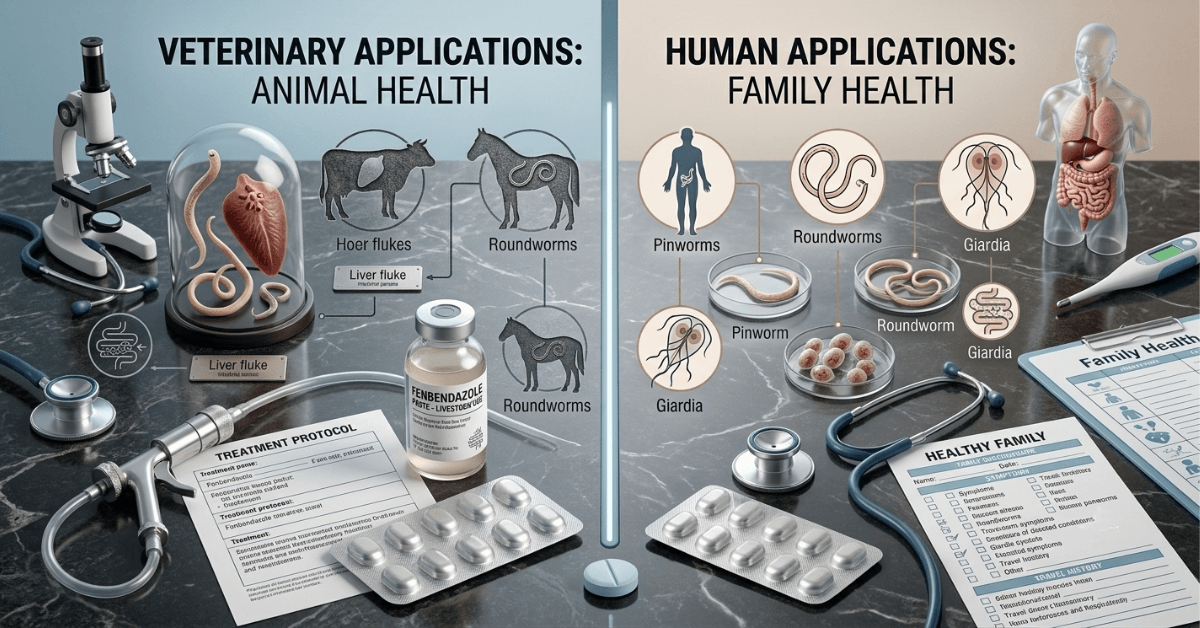
Fenbendazole: Powerful Veterinary Worm Control
Fenbendazole is a licensed veterinary antiparasitic medicine widely used under the brand name Panacur. It effectively treats a broad range of internal parasites in dogs, cats, horses, cattle, and goats. It is not authorised for human use. Any discussion of fenbendazole outside its veterinary role must involve a qualified healthcare professional.

Understanding Parasitic Worm Infections
Parasitic worm infections are a significant concern in companion animals and livestock.
Left untreated, worm infestations pose serious risks. The digestive tract, lungs, and other organs can all be affected.
Animals may show signs such as weight loss, a dull coat, diarrhoea, coughing, or a noticeably swollen abdomen.
The most common parasites treated with fenbendazole include:
- Roundworms
- Tapeworms
- Hookworms
- Lungworms
- Whipworms
These parasites complete part of their life cycle inside the host animal.
Untreated worm infections can seriously harm animals. Young or vulnerable animals may not survive a heavy infestation.
Regular parasite control is a cornerstone of responsible animal husbandry and companion animal care. Veterinary surgeons recommend tailored worming programs based on the animal’s age, species, lifestyle, and local environment. Panacur is one of the most frequently prescribed and trusted products within this clinical context.
How Fenbendazole Treats Parasites
Fenbendazole belongs to a class of medicines called benzimidazole anthelmintics. It targets beta-tubulin, a protein found inside worm cells. This disrupts how worms survive and grow. This protein is essential for building microtubules, the structural scaffolding that allows worm cells to divide and absorb energy.
By attaching to beta-tubulin, the disruption of this cellular process is triggered by fenbendazole. Worm cells can no longer replicate or sustain themselves. The worm loses energy, weakens, and dies. The body then expels it naturally through digestion.
Fenbendazole acts selectively on the beta-tubulin of parasitic worms rather than on mammalian cells. This is why fenbendazole has been used safely for decades. Most animals tolerate it well at the correct prescribed dose.
Authorised Veterinary Uses of Fenbendazole
Full veterinary marketing authorisation is held by fenbendazole. As a UK governmental body, it ensures all veterinary medicines meet required safety standards. In animals, confirmed parasitic infections are treated effectively through the use of fenbendazole.
Veterinary indications:
- Roundworm infections (Toxocara, Toxascaris) in dogs and cats
- Tapeworm infections in specific animal species
- Lungworm infections in dogs and cattle
- Hookworm and whipworm infections in dogs
- Mixed worm burdens in horses, cattle, and goats
Treatment is typically administered orally as granules, paste, or suspension. Course length and dosing depend on the species, body weight, and the specific parasite involved. Your vet will calculate the correct dose. They will also advise on timing and how often to treat.
UK Brand and Formulation Reference
| Brand | Active Ingredient | Licensed Species | Available Formulations | Regulatory Authority |
|---|---|---|---|---|
| Panacur | Fenbendazole | Dogs, cats, horses, cattle, goats | Granules, oral paste, oral suspension | VMD (veterinary licence only) |
No human-authorised product containing fenbendazole exists in the UK. These are veterinary medicines only. Store, handle, and dispense them as directed by your vet.
Benefits of Fenbendazole in Parasite Management
Fenbendazole offers several well-documented advantages within veterinary practice. It has a broad spectrum of activity, targeting multiple parasite species within a single treatment course. Because multiple worm species may infect simultaneously, fenbendazole is particularly well-suited to such cases.
Fenbendazole can be used safely in pregnant animals at the correct dose. Vets often prescribe Panacur during pregnancy to protect puppies from roundworm transmission.
Across a range of animal species, therapeutic doses of fenbendazole are associated with a low rate of unwanted reactions. It is widely regarded as well-tolerated in clinical use. It suits animals of all ages. This makes it a practical option throughout the life of pets and livestock.
Vets can include fenbendazole in a planned herd or flock worming programme. This helps prevent resistance and keeps treatment working long term.
Possible Side Effects in Animals
At recommended veterinary doses, fenbendazole is well tolerated by most animals. Adverse reactions are uncommon but may occasionally occur during treatment.
| Side Effect | Severity | Duration |
|---|---|---|
| Vomiting or loose stools | Mild | Transient |
| Reduction in appetite | Mild | Temporary |
| Lethargy after treatment | Mild | Temporary |
Because no additional treatment is typically required, these reactions tend to subside on their own within a short period.
Contact your vet straight away if your animal vomits repeatedly, seems very lethargic, or shows signs of an allergic reaction.
Fenbendazole and Cancer: What the Evidence Currently Shows
A notable rise in public curiosity has emerged around fenbendazole. It is increasingly discussed online as a possible human cancer treatment. This section provides factual context only. It is not medical advice. All cancer treatment decisions must be made with a qualified specialist.
Fenbendazole has attracted research interest because of how it works at a cellular level. Since human cancer cells also rely on microtubule activity during division, researchers have explored whether benzimidazole compounds might interfere with tumour cell growth. Some early cell-based and animal studies have produced results of scientific interest.
Because controlled trials in humans remain limited, results observed in laboratory settings cannot be directly applied to real-world patient outcomes. Many promising laboratory findings do not hold up in human trials. No large human clinical trial has proven fenbendazole safe or effective for cancer.
Personal testimonials circulating on social media can appear compelling. In many reported cases, however, the individuals concerned were simultaneously receiving standard oncology treatments such as chemotherapy or immunotherapy. It is not scientifically possible to attribute any clinical outcome to fenbendazole alone under those circumstances.
If you have read about fenbendazole online, speak to your oncologist before acting on any information. Your specialist can review current evidence in the context of your situation.
Important Safety Considerations for Patients
Fenbendazole is formulated for use in animals and has not been evaluated for human safety by any regulatory authority. Taking veterinary products without medical supervision carries real and documented risks.
From documented human case reports, serious concerns have been identified.
These include:
- Liver inflammation and the progressive deterioration of liver function.
- Raised liver enzymes indicate significant hepatic stress
- Unpredictable interactions with chemotherapy and other prescribed medicines
- Widespread inflammatory responses affecting multiple body tissues
Drug interactions are a particular concern for cancer patients. Fenbendazole uses the same liver pathways as many cancer medicines. This may raise or lower drug levels in the blood, affecting how well treatment works or increasing side effects.
Due to significant safety concerns, fenbendazole is contraindicated in pregnant women, those who are breastfeeding, children, and anyone with liver or kidney disease. No paediatric or human dosing guidance exists for this medicine.
MHRA Yellow Card Scheme
Report any adverse reaction after taking a medicine or veterinary product at yellowcard.mhra.gov.uk. This applies even to products not licensed for human use.
When to Speak to a Vet or Doctor
For animal parasite management, consult your veterinary surgeon before starting any worming programme. They will confirm the right product, dose, and treatment interval for your specific animal.
For any human health concern related to fenbendazole, speak immediately to your GP or specialist. Seek urgent medical help if you develop jaundice, stomach pain, persistent tiredness, or a new rash after contact with any veterinary product.
Frequently Asked Questions
Q: Can fenbendazole be used by humans?
A: Fenbendazole is currently under scientific investigation for potential human applications. Early laboratory research shows promising results. Because treatment needs vary greatly between individuals, a qualified doctor should always be consulted to identify the most suitable options available.
Q: Can fenbendazole cause liver damage in humans?
A: Most animals tolerate fenbendazole well at prescribed doses. In humans, early-stage research continues. Regular liver checks and medical oversight help keep any treatment safe and well managed.
Q: What is the difference between fenbendazole and ivermectin?
A: Both belong to the antiparasitic medicine family and show broad-spectrum effectiveness. Ivermectin has approved human uses. Fenbendazole is currently being researched for possible human applications.
Conclusion
Fenbendazole is a clinically proven and widely trusted treatment for internal parasites in animals. When used correctly under veterinary supervision, it offers broad-spectrum activity, reliable tolerability, and a well-established safety record across a range of species.
Interest in its potential role in oncology reflects an early and active area of scientific enquiry. Human trial data remains limited at present. Patients should explore all cancer options through their oncology team and clinical trials, never by self-medicating with veterinary products.
Always consult a suitably qualified healthcare professional or veterinary surgeon before starting or changing any treatment.
References
- Cancer Research UK. Clinical trials for cancer. https://cancerchat.cancerresearchuk.org/f/ask-the-nurses/124361/fenbendazole-and-antihelmintics-in-the-treatment-of-cancer
- Defra.gov.uk: https://www.vmd.defra.gov.uk/productinformationdatabase/files/UKPAR_Documents/UKPAR_1059046.PDF
Medical Disclaimer
This article is for informational purposes only and does not replace professional medical advice. Always consult a registered healthcare professional before starting or changing any treatment. Never use veterinary medicines in place of authorised human medicines.