
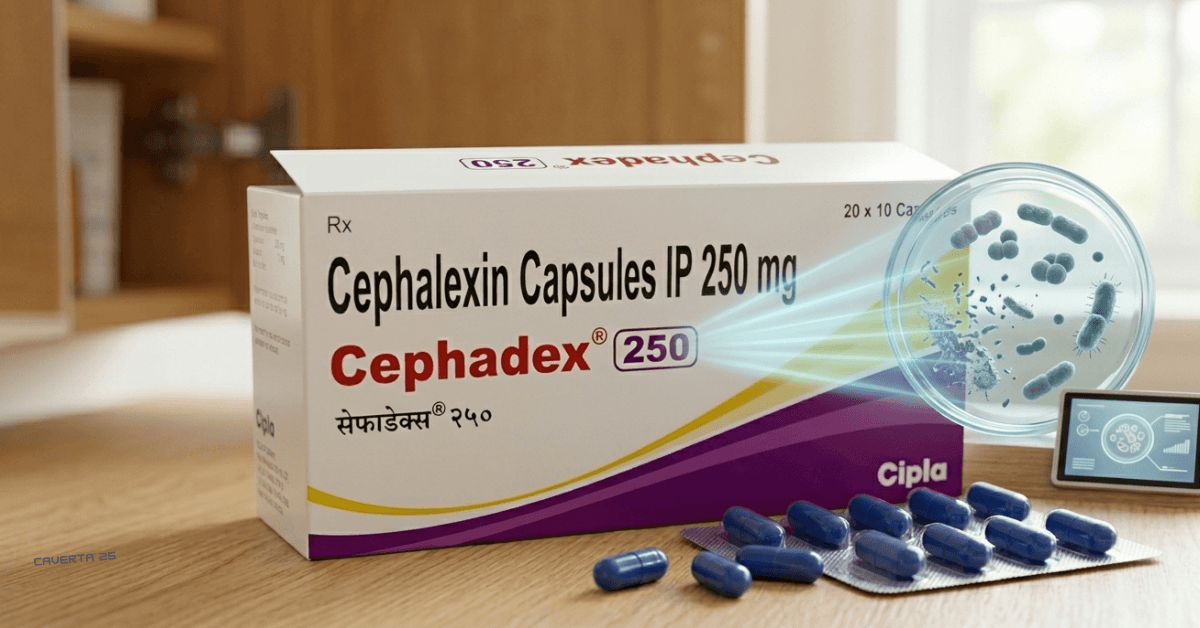
Cephadex 250: Cephalexin 250mg That Fights Infection
A guide to Cephadex 250 cephalexin 250mg for children’s bacterial infections. Learn about uses, dosage, side effects, and important safety advice.
Cephadex 250 is a prescription antibiotic tablet containing 250mg of cephalexin. Cephadex 250 is classified within the cephalosporin family of antibiotics. Bacterial infections of the throat, ears, skin, urinary tract, and bones in children are among the conditions for which it is prescribed. It is a prescription-only medicine and must be used under medical supervision.
If your child has been prescribed Cephadex 250 in the UK, you may have questions about what it contains and how it works.
Cephadex 250 is a prescription antibiotic containing 250mg of cephalexin. As a member of the cephalosporin group, this antibiotic shares a common mechanism with others in its class.
Different brand names for cephalexin exist in UK pharmacies. Your child’s doctor has chosen this medicine to treat a specific bacterial infection.
What Is Cephadex 250?
Cephadex 250 has cephalexin 250mg. Because it disperses readily in water, administering Cephadex 250 to children is considerably more straightforward — a practical benefit of its first-generation cephalosporin formulation. This means it targets a broad range of common bacteria.
It is a prescription-only medicine (POM). It must only be used under the guidance of a qualified clinician.
| Parameter | Detail |
|---|---|
| Active Ingredient | Cephalexin 250mg |
| Medicine Class | First-Generation Cephalosporin Antibiotic |
| Regulatory Status | Prescription-Only Medicine (POM) |
| Indicated For | Bacterial infections in children |
| Habit Forming | No |
How Cephalexin Works in the Body
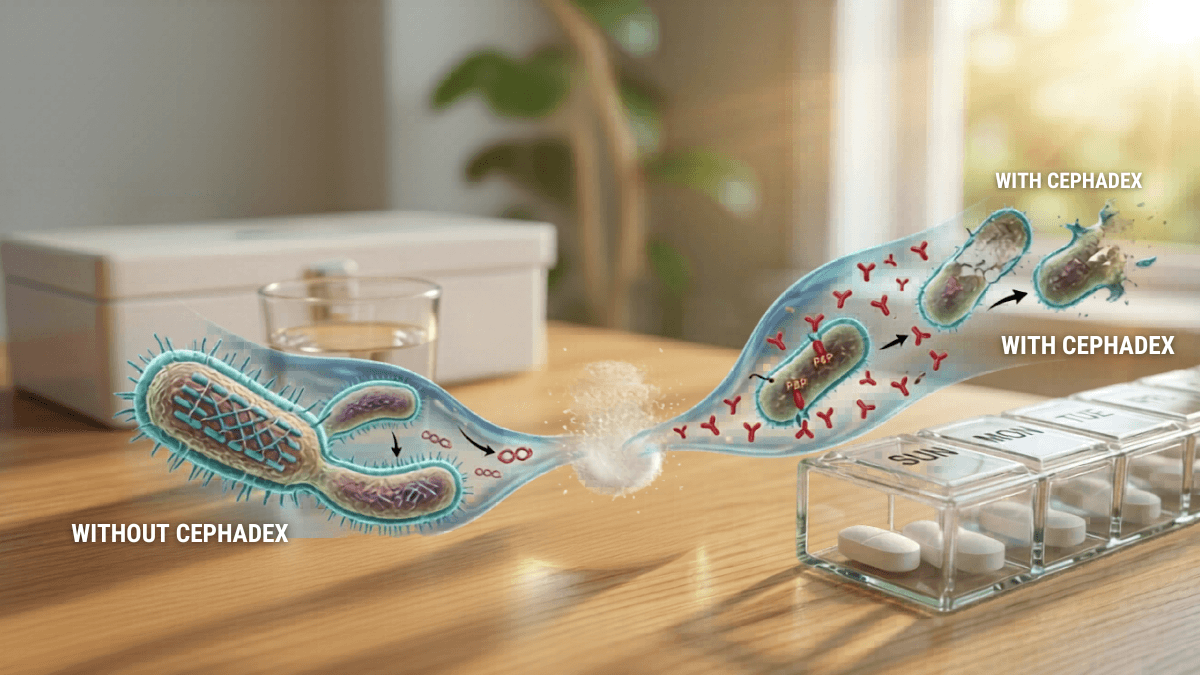
Cephalexin works by preventing bacteria from forming their cell walls. Bacterial survival and replication depend entirely on the integrity of the cell wall. By disrupting its formation, Cephadex 250 prevents the infection from progressing. Over time, the bacteria die off completely.
Cephadex 250 is effective only against bacterial infections. Viral illnesses such as colds and flu fall outside the scope of what Cephadex 250 can treat, as it acts only against bacterial pathogens.
When Doctors Prescribe Cephadex 250
Doctors prescribe Cephadex 250 to treat a range of bacterial infections in children. Several different sites in the body may be involved, depending on the type of bacterial infection present.
Conditions treated include:
- Pharyngitis and tonsillitis (throat infections)
- Urinary tract infections (UTIs)
- Skin and soft tissue infections
- Osteomyelitis (bone infections)
- Dental infections.
Before prescribing, your child’s doctor will evaluate the nature and severity of the infection. Cephadex 250 is selected when cephalexin is the most appropriate antibiotic choice.
Benefits of Cephadex 250
Cephadex 250 targets a wide range of common bacterial infections in children. It begins working within one hour of the first dose.
The dispersible tablet format makes it easier to administer to younger children. A small quantity of water is all that is needed, as the tablet disperses rapidly on contact with liquid.
Cephalexin has a well-established safety record in paediatric medicine. Decades of clinical use have established Cephadex 250 as a well-recognised option in paediatric antibiotic treatment.
Completing the full course helps clear the infection entirely. This also reduces the risk of antibiotic resistance developing.
Alternative Medicine Doctors May Consider
Doctors may consider other antibiotics depending on the type of infection and the child’s medical history.
Alternatives within the cephalosporin class include cefuroxime and cefalexin, as well as branded products such as Keflex. Your doctor will select the most appropriate option based on clinical need.
Always follow your prescribing clinician’s recommendation. Do not switch or substitute antibiotics without medical advice.
Your pharmacist can advise further on cephalosporin antibiotic options.
Possible Side Effects of Cephadex 250
Like any medicine, Cephadex 250 may cause side effects in some children. Not every child will be affected.
| Type | Side Effect | Notes |
|---|---|---|
| Common | Diarrhoea | Usually mild and temporary |
| Common | Stomach pain or discomfort | Often improves as the body adjusts |
| Common | Nausea and vomiting | Settles in most cases without treatment |
| Common | Headache | Mild and usually short-lived |
| Common | Dizziness | Resolves as the body adjusts to the medicine |
| Common | Loss of appetite | Temporary in most children |
| Common | Indigestion | May improve when taken with food |
| Serious | Severe or bloody diarrhoea | Seek medical attention immediately |
| Serious | Skin rash or itching | May indicate an allergic reaction — contact your doctor |
| Serious | Joint pain | Uncommon — inform your doctor promptly |
| Serious | Dark or clay-coloured stools | Contact your doctor without delay |
| Serious | Dark urine | May indicate liver involvement — seek medical advice |
If any serious side effects occur, seek medical advice promptly rather than waiting for the next routine appointment.
Important Safety Advice
This section covers key safety information for parents and carers. Read this carefully before giving Cephadex 250 to your child.
Antibiotic Resistance
Stopping the course early — even when symptoms improve — can allow surviving bacteria to develop resistance, which is why completing every prescribed dose matters.
Antibiotic resistance means the medicine may no longer work in future infections. This is a serious public health concern.
Diarrhoea Warning
Cephalexin can reduce helpful bacteria in the gut. This may cause diarrhoea during or after treatment.
Offer your child plenty of fluids if diarrhoea occurs. Contact your doctor if diarrhoea is severe, watery, or contains blood.
Over-the-counter anti-diarrhoeal medicines should only be given to children after a pharmacist or doctor has been consulted, as some may not be appropriate during antibiotic treatment.
Liver Function
Cephadex 250 may affect liver enzyme levels in some children. Children with existing liver conditions require careful medical monitoring.
Your doctor will assess liver function and may adjust the dose if needed.
Kidney Function
Cephalexin is processed and removed by the kidneys. Children with renal (kidney) impairment may need a lower dose.
Kidney function is evaluated by your doctor prior to prescribing this medicine. The dosage guidance they provide must be followed exactly.
Seizure Disorders
Use Cephadex 250 with caution in children who have a history of seizures or fits. Cephalexin may increase seizure risk in susceptible children.
Seizure medicines must not be stopped during antibiotic treatment. Your doctor will advise on safe co-administration.
Allergic Reactions
Do not give Cephadex 250 if your child is allergic to cephalexin or any cephalosporin antibiotic. Penicillin-allergic children may also be at risk of cross-reactivity (a reaction triggered by a similar medicine).
Seek emergency medical help if you notice a rash, facial swelling, or breathing difficulties after the first dose.
Pregnancy and Breastfeeding
Cephadex 250 is not indicated for use during pregnancy. Mothers who are breastfeeding are advised not to take this medicine, as its suitability in this context has not been established.
Speak to your doctor immediately if pregnancy is confirmed during treatment.
Drug Interactions
Before giving Cephadex 250, provide your child’s doctor with a full list of all medicines your child is currently taking.
Known drug interactions include:
- Warfarin (an anticoagulant): Cephalexin may affect the anticoagulant effect of warfarin
- Furosemide (a diuretic) may increase cephalexin plasma levels
- Ethinylestradiol (found in contraceptive pills): Concurrent antibiotic use may reduce the efficacy of the cholera vaccine
- The cholera vaccine is an antibiotic that may reduce the vaccine’s effectiveness
Always inform your prescribing clinician and pharmacist of all medicines, supplements, and herbal remedies your child takes. This includes over-the-counter products.
Speak to your pharmacist for further guidance on drug interactions.
When Should You Speak to a Doctor?
Contact your GP if you notice any of the following:
- No improvement after 48 to 72 hours of treatment
- Signs of an allergic reaction such as a rash or facial swelling
- Unusual fatigue, dark urine, or yellowing of the skin.
Seek emergency medical help immediately for severe allergic reactions. Do not wait.
Always seek advice from a qualified UK doctor or pharmacist before beginning or making any changes to your child’s treatment.
How to Give Cephadex 250 Correctly
The following dosage instructions serve as general guidance only and do not replace the advice of your prescribing clinician. Always follow your child’s doctor’s instructions exactly.
- Disperse the tablet in one teaspoonful of water before giving it to your child
- The tablet must be completely dissolved in water before it is given to the child. Administering it before full dissolution is not safe.
- Give with or without food, though food may reduce stomach irritation
- Consistent plasma levels are best maintained when the dose is given at the same time every day
- Never give a double dose. If a dose is missed, give the next dose when it is due
- Never exceed the prescribed dose under any circumstances
A suspected overdose requires immediate emergency attention. Call NHS 111 straight away or take the child to the nearest A&E department without delay.
Storage and Handling Advice
- Store Cephadex 250 at room temperature, away from direct sunlight and moisture.
- Always keep medicines out of reach of children and pets.
- Check the expiry date before each use.
- Retain the original packaging throughout the course of treatment.
- Dispose of any unused medicine responsibly, return it to your local pharmacy
Responsible Access to Treatment
In the UK, Cephadex 250 holds prescription-only medicine (POM) status, meaning it cannot be purchased or administered without a valid prescription. It must be dispensed through a regulated pharmacy with a valid prescription.
Do not attempt to obtain prescription antibiotics without a prescription. Inappropriate antibiotic use contributes to antimicrobial resistance.
Before starting or modifying your child’s treatment, always seek guidance from a qualified UK doctor or pharmacist.
Frequently Asked Questions
Q: What is Cephadex 250 used for?
A: Cephadex 250 contains cephalexin 250mg. Bacterial infections affecting the throat, ears, skin, urinary tract, and bones in children are the primary conditions this medicine is prescribed to treat.
Q: Does Cephadex 250 treat a cold?
A: No. Cephadex 250 treats bacterial infections only. Colds are caused by viruses. Cephalexin has no effect against viral infections. Always consult your child’s doctor for the correct treatment.
Q: How to use Cephadex?
A: Dissolve the tablet in one teaspoon of water before giving it to your child. Administer at the same time daily. Always follow your doctor’s prescribed dosage instructions exactly.
Conclusion
Cephadex 250, a cephalosporin antibiotic, containing 250mg of cephalexin, is prescribed by doctors for common bacterial infections in children. It works by blocking bacterial cell wall synthesis, halting the spread of infection. Medical supervision is crucial. Consult a UK doctor or pharmacist before starting or changing treatment.
References
- NHS UK — Cefalexin (Cephalexin) Patient Information: www.nhs.uk
- MHRA — Antibiotic Safety Guidance: www.gov.uk/mhra
- NICE — Antimicrobial Prescribing Guidelines: www.nice.org.uk
Medical Disclaimer
This article is for informational purposes only and does not replace professional medical advice. Always consult a qualified doctor or pharmacist before starting or changing any treatment. Prescription medicines must never be given to a child unless a valid prescription from a registered doctor has been obtained.