

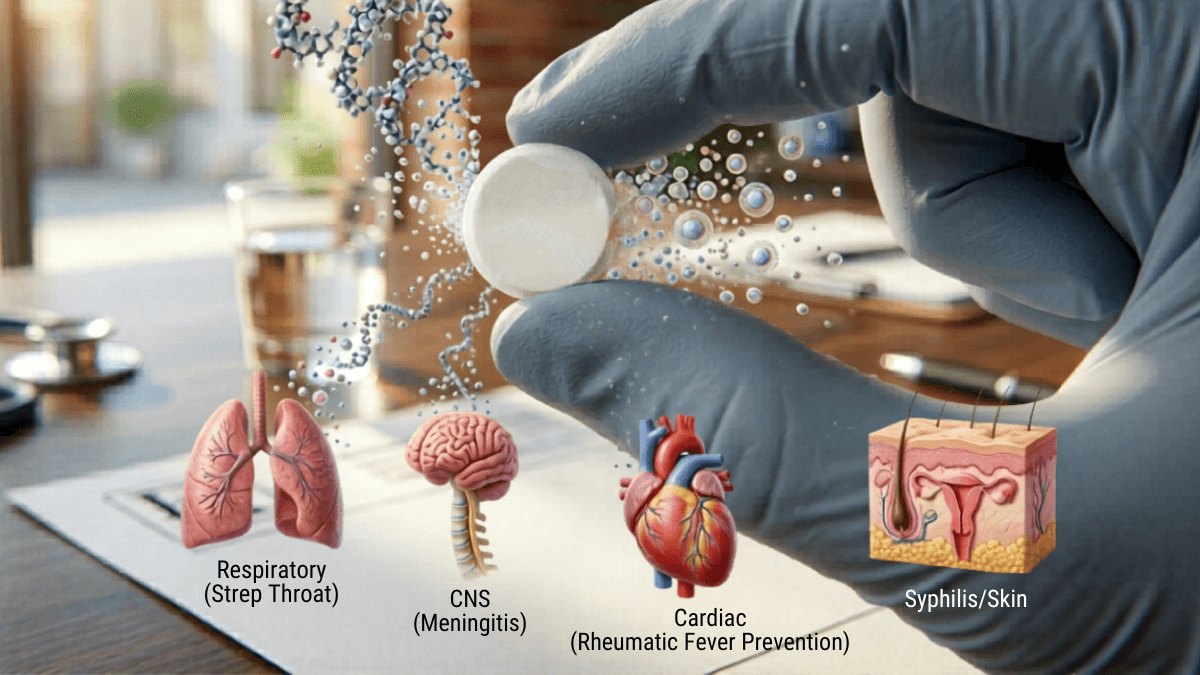
Pentids 800 is a prescription-only antibiotic tablet containing Penicillin G Potassium 800 mg. Bacterial infections across multiple body systems — including respiratory tract infections, meningitis, syphilis, and skin infections — are among the conditions for which this antibiotic is prescribed. Available only via a valid UK prescription, it belongs to the well-established beta-lactam antibacterial class.
If your doctor has prescribed Pentids 800, you likely want to understand exactly what it does and how to take it safely. This guide covers everything you need to know, from how the medicine works in your body to important safety advice for patients.
Pentids 800 contains Penicillin G Potassium, the same active compound known clinically in the UK as Benzylpenicillin Potassium. It is a prescription-only medicine (POM).
Detail Information
| Field | Details |
|---|---|
| Brand Name | Pentids 800 |
| UK Reference Brand | Benzylpenicillin Potassium |
| Active Ingredient | Penicillin G Potassium |
| Strength | 800 mg |
| Drug Class | Beta-lactam antibiotic |
| Prescription Status | Prescription-only medicine (POM) |
| Route of Administration | Oral tablet |
How Penicillin G Potassium Works in the Body
Classified as a bactericidal antibiotic, Penicillin G Potassium destroys bacteria outright. It does not merely slow bacterial growth — it eliminates it.
Within the bacterial cell wall, specialised targets known as penicillin-binding proteins (PBPs) are sought out and bound by this antibiotic. Once those binding sites are occupied, the bacteria lose their ability to construct or restore their cell walls. Without a functioning cell wall, the bacterial cell collapses and dies in a process called lysis.
Crucially, human cells lack cell walls. This means the medicine targets bacteria selectively whilst leaving your own cells unharmed. Penicillin G Potassium is effective against gram-positive and gram-negative bacteria, as well as both aerobic organisms (which require oxygen) and certain anaerobic organisms (which survive without it).
It is important to note that Pentids 800 has no effect on viral infections. Viral illnesses such as colds, influenza, and COVID-19 are not responsive to this antibiotic. It is effective only against bacterial infections. Using antibiotics for viral illnesses unnecessarily contributes to antimicrobial resistance, a serious public health concern in the UK.
What Conditions Does Pentids 800 Treat?
Doctors prescribe Pentids 800 for a wide range of bacterial infections where the causative organism is known or strongly suspected to be penicillin-sensitive.
Clinically authorised uses include:
- Respiratory tract infections — pneumonia, bronchitis, and pharyngitis linked to Streptococcus species are among the respiratory tract infections for which clinical authorisation has been granted
- Throat and nose infections — upper respiratory infections in both adults and children
- Meningitis — bacterial meningitis arising from Neisseria meningitidis or Streptococcus pneumoniae is a further condition within this antibiotic’s approved clinical scope
- Sexually transmitted infections — first-line treatment for syphilis; also used in early or uncomplicated gonorrhoea
- Skin and soft tissue infections — where susceptible bacteria are responsible, conditions such as cellulitis, infected wounds, and abscesses fall within the approved treatment indications for skin and soft tissue infections
- Bloodstream infections — septicaemia and bacteraemia involving penicillin-sensitive organisms
- Rheumatic fever prophylaxis — long-term prevention of recurrent Streptococcal infections
- Pre-operative prophylaxis — infection prevention for high-risk surgical patients, as directed by the clinical team
Your prescriber will follow NICE antimicrobial guidelines when determining whether Pentids 800 is the most appropriate antibiotic for your infection.
Possible Side Effects and Reporting
Like any medicine, Pentids 800 carries the possibility of side effects. Not everyone experiences them, and your prescriber will have judged that the benefits outweigh the risks before issuing a prescription.
| Condition | What to Watch For | What to Do |
|---|---|---|
| Common Side Effects | Nausea or vomiting, stomach pain or cramps, diarrhoea, headache, skin rash, fatigue or weakness, and muscle or joint pain | Should any side effects continue or become more severe, contact your GP or call NHS 111 |
| Anaphylaxis (Severe Allergic Reaction) | Facial or lip swelling, throat tightening, breathing difficulty, a severe rash, or sudden collapse | Call 999 immediately |
| Jaundice | Yellowing of the skin or eyes | Seek urgent medical review if this occurs |
| Clostridium Difficile-Associated Diarrhoea (CDAD) | Persistent, watery, or bloody diarrhoea following antibiotic use | Contact your GP without delay |
| Severe Skin Reactions | Blistering or peeling skin | Stop the medicine and seek urgent advice immediately |
MHRA Yellow Card Scheme
Both patients and clinical professionals are encouraged to use the MHRA Yellow Card scheme to flag suspected reactions. Reports can be submitted at yellowcard.mhra.gov.uk or via the Yellow Card app.
Your report helps the MHRA monitor the real-world safety of authorised medicines across the UK.
Important Safety Advice
Allergy history
It is the first and most important thing to disclose. Tell your prescriber if you have ever had a reaction to penicillin or any cephalosporin antibiotic, as cross-reactivity between these classes can occur. Always share your full allergy history before any prescription is issued.
Liver and kidney conditions
Affect how Pentids 800 is processed. Penicillin G Potassium is primarily cleared by the kidneys. If you have renal or hepatic impairment, your doctor may adjust your dose or monitor you more closely. Prescribing takes place only in circumstances where the clinical benefit is judged to outweigh any associated risk.
Heart conditions and asthma
May increase the risk of an adverse reaction. Inform your prescriber of any cardiac history or asthma diagnosis before commencing treatment. Your pharmacist can also advise on any additional precautions relevant to your health profile.
Vaccines
Do not take Pentids 800 at the same time as live bacterial vaccines, including the oral typhoid vaccine or the BCG vaccine for tuberculosis. The antibiotic may reduce the vaccine’s protective effect. Inform your GP or practice nurse of any planned vaccination during your treatment course.
Pregnancy and breastfeeding
Use Pentids 800 with caution during pregnancy. Because Penicillin G Potassium is transferred into breast milk, a nursing infant may be affected if the mother takes this antibiotic. Before starting this antibiotic, a doctor must be consulted by anyone who is pregnant, trying to conceive, or breastfeeding.
Alcohol, children, and elderly patients
Avoid alcohol during treatment, as it may worsen nausea and gastrointestinal side effects. Pentids 800 should only be given to children under direct medical supervision, with weight-appropriate dosing confirmed by a prescriber. Elderly patients may require dose adjustment due to age-related changes in kidney function. A qualified clinician should review suitability before prescribing.
Drug Interactions
| Interacting Medicine | Severity | Clinical Concern |
|---|---|---|
| Methotrexate | Severe | Penicillin may reduce methotrexate clearance, raising toxicity risk |
| BCG Vaccine | Severe | Antibiotic activity may impair live vaccine efficacy |
| Oral Typhoid Vaccine | Moderate | Avoid concurrent use, as it reduces vaccine protection |
Always tell your prescriber and pharmacist about every medicine, supplement, or herbal product you are currently taking.
Accessing Pentids 800 Responsibly in the UK
Pentids 800 is a prescription-only medicine. It cannot be legally supplied without a valid prescription from a registered UK healthcare professional. Do not obtain antibiotics from unverified or unregulated online sources, as medicines from such platforms may be counterfeit or incorrectly dosed.
Frequently Asked Questions
Q: What is Pentids 800 used for?
A: Pentids 800 treats bacterial infections, including pneumonia, meningitis, syphilis, skin infections, and throat infections. It is a prescription-only antibiotic containing 800 mg of Penicillin G Potassium.
Q: How does Pentids 800 work?
A: Pentids 800 kills bacteria by destroying their cell walls. Bacterial survival depends entirely on a functioning cell wall, which this antibiotic disrupts irreparably. This targeted action clears infection whilst leaving your body’s own cells unharmed.
Conclusion
Pentids 800 (Penicillin G Potassium 800 mg) is a well-established, MHRA-regulated antibiotic with a long and reliable record in UK clinical practice. By targeting bacterial cell walls directly, it effectively clears a broad range of serious infections whilst leaving human cells unharmed.
Medical supervision throughout your course is essential. Always complete your full prescription, report any side effects via the MHRA Yellow Card scheme, and speak to your GP or pharmacist if you have any concerns. Because antibiotic resistance poses a threat to public health, using antibiotics responsibly benefits not only the individual but also society as a whole.
References
- NHS (2024). Penicillin antibiotics. www.nhs.uk
- NICE (2024). Antimicrobial prescribing guidelines. www.nice.org.uk
- UKHSA. Managing common infections: primary care guidance.
Medical Disclamair
This article is for informational purposes only and does not replace professional medical advice. Always consult a registered healthcare professional before starting or changing any treatment. Should a medical emergency arise, dial 999 without delay or go directly to your nearest A&E department.