

Description
Axepta 40 Atomoxetine | ADHD Treatment Guide
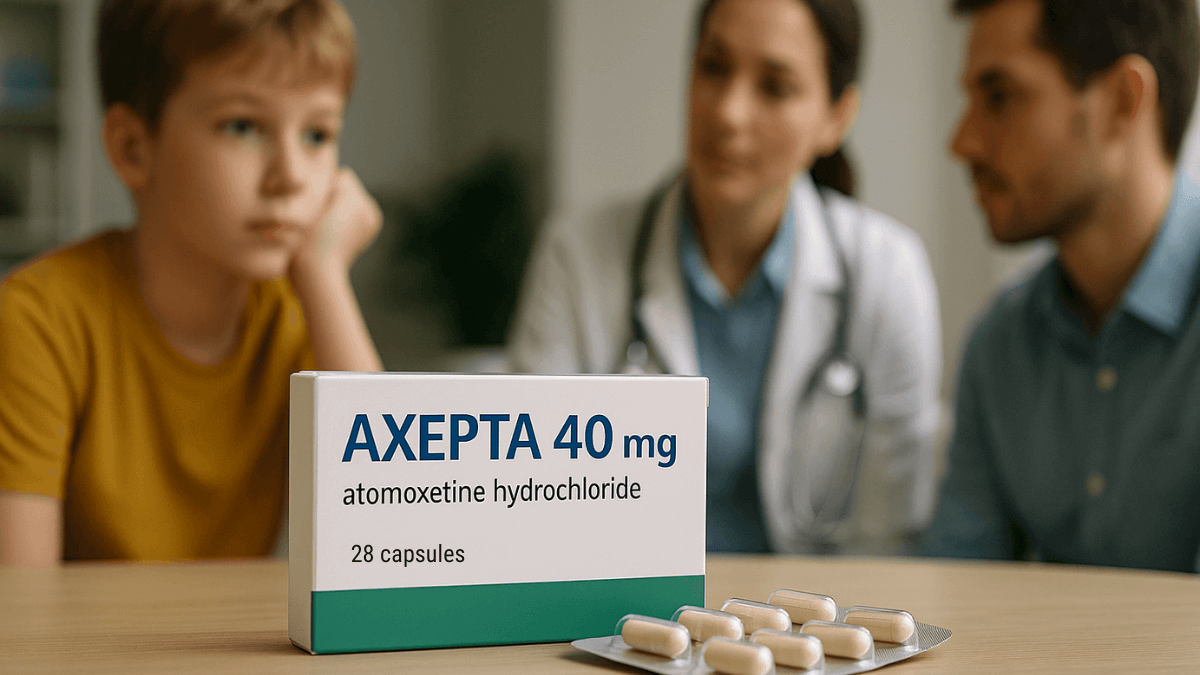
Different brand names of atomoxetine are available in the UK. Your prescriber may have issued one of several branded versions. Axepta 40 is one such brand. It contains the same active ingredient as Strattera, which is the widely recognised UK reference brand. This guide covers Axepta 40, how atomoxetine works, and how to take it safely with medical supervision.
 Composition
Active Ingredient
Atomoxetine 40 mg
Available Variants
- Axepta 10
- Axepta 20
- Axepta 18
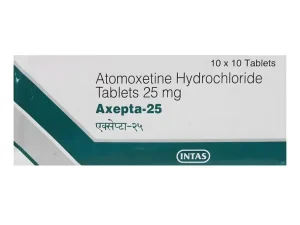
- Axepta 25
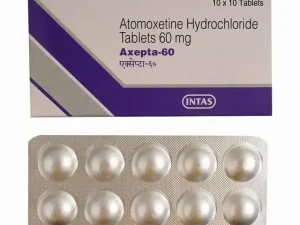
- Axepta 60
 Manufacturer
Intas Pharmaceuticals Limited
 Expiry
As per the actual batch information
What Is Axepta 40?
Axepta 40 is a Prescription Only Medicine (POM) manufactured by Intas Pharmaceuticals Limited. Each tablet contains 40mg of atomoxetine as the active ingredient. Selective norepinephrine reuptake inhibitors (NRI) are the medicine class to which atomoxetine belongs. These medicines act on norepinephrine pathways in the brain.
Axepta 40 meets MHRA pharmaceutical standards and is bioequivalent to Strattera.
Children, adolescents, and adults with ADHD may be prescribed Axepta 40, which holds a UK licence for this indication. It is a prescription-only medicine. It must be obtained through a valid prescription verification.
Composition and Available Variants
| Parameter | Details |
|---|---|
| Active Ingredient | Atomoxetine 40mg |
| Manufacturer | Intas Pharmaceuticals Limited |
| Therapeutic Category | Selective Norepinephrine Reuptake Inhibitor (NRI) |
| Chemical Class | Phenoxypropylamine |
| Habit-forming | No |
| Action Class | CNS / ADHD Management |
| Expiry | As per actual batch information |
| Available Variants | Axepta 10, Axepta 18, Axepta 20, Axepta 25, Axepta 60 |
Axepta 40 vs Strattera: Scientific Comparison
Both Axepta 40 and Strattera contain the same active ingredient, atomoxetine.
| Property | Axepta 40 | Strattera |
| Active Ingredient (Salt) | Atomoxetine | Atomoxetine |
| Strength | 40mg | 40mg (equivalent) |
| Mechanism of Action | Selective NRI; inhibits norepinephrine reuptake | Selective NRI; inhibits norepinephrine reuptake |
| Chemical Class | Phenoxypropylamine | Phenoxypropylamine |
| Bioequivalence | Bioequivalent in active ingredient/effect | Originator brand |
| Therapeutic Effect | ADHD symptom management | ADHD symptom management |
| Habit-Forming | No | No |
How Atomoxetine Works
Atomoxetine inhibits (blocks) the reuptake of norepinephrine (a neurotransmitter, a chemical messenger in the brain) in the prefrontal cortex. The prefrontal cortex regulates attention, working memory, and impulse control. By increasing norepinephrine availability, atomoxetine improves signal transmission in these pathways.
Unlike stimulant ADHD medicines (such as methylphenidate), atomoxetine has no stimulating effect. It works gradually and does not carry the same risk of stimulant-related side effects. Several weeks of regular use are typically needed before the full therapeutic benefit is felt.
Understanding ADHD and Atomoxetine’s Role
Attention Deficit Hyperactivity Disorder — known as ADHD — affects neurodevelopment. Both brain development and function are shaped by this condition.
Axepta 40 addresses the neurological basis of ADHD. Atomoxetine does not treat bacterial, fungal, or viral conditions. Atomoxetine is part of a long-term management plan. This plan typically includes monitoring, behavioural counselling, and educational support.
ADHD Symptoms Treated by Atomoxetine
- Difficulty sustaining attention
- Hyperactivity and restlessness
- Impulsive decision-making
- Forgetfulness and disorganisation
- Poor academic or occupational performance
- Emotional dysregulation (difficulty regulating emotional responses)
- Behavioural instability
Clinical Benefits of Axepta 40
Axepta 40 supports a gradual, steady increase in norepinephrine in the prefrontal cortex. Improved task concentration and a longer attention span are among the outcomes that follow. With continuous use, it stabilises thinking patterns and reduces restlessness.
Patients commonly report improved organisational skills and better performance in classroom or workplace settings. Axepta 40 also supports emotional regulation. It may reduce the emotional instability frequently associated with chronic ADHD.
How to Use Axepta 40
Swallow the tablet whole. Always use a full glass of water. Whether or not food is taken beforehand, your doctor’s instructions must always be followed. The tablet must not be broken, crushed, or chewed.
Consistent medicine levels in the body are maintained when the dose is taken at the same time daily. Stopping treatment early can reduce effectiveness. Your prescriber’s directions on completing the full course must be followed without alteration. Your GP must be consulted before any dose changes are made.
Axepta 40 mg tablets are for internal (oral) use only. Store tablets in their original packaging at all times. A broken packaging seal means the tablets must not be used. Always wash your hands before handling your tablets.
Missed Dose Guidance
Take the missed dose the moment you remember. When the next scheduled dose is close, skipping the missed dose altogether is the recommended approach. Never double up doses to compensate for one that was skipped.
When to Seek Medical Attention
If no improvement is seen after several weeks, contact your GP without delay. Also seek advice if you experience increased anxiety or restlessness. A review of your dosage or overall treatment plan may be needed.
Seek Urgent Medical Attention If You Experience
- An allergic reaction may present as rash, swelling (oedema), or difficulty breathing (dyspnoea).
- Suicidal thoughts, new or worsening mood changes, or unusual behavioural changes
- Chest pain, rapid heartbeat, or fainting episodes
- Severe abdominal pain or jaundice (yellowing of the skin or eyes) are warning signs that must not be ignored.
Any severe reaction warrants immediate emergency care. Do not wait. If symptoms become life-threatening, stop the medicine immediately. Your nearest A&E department should be attended immediately, or call 999.
Safety Information
This section forms a core part of this guide. A qualified UK GP or pharmacist should always be consulted before treatment is started or changed. Understanding the side effects, contraindications, and interactions of atomoxetine is essential for safe use.
| Category | Side Effects | Action Required |
| Common (Typically mild; often resolve early in treatment) |
* Headache
* Abdominal discomfort or nausea
* Fatigue or mild somnolence
* Loss of appetite
* Irritability
* Difficulty sleeping (insomnia) |
Monitor symptoms; consult your doctor if they persist or become bothersome. |
| Serious: Liver Indicators |
* Yellowing of the skin or eyes (jaundice)
* Dark-colored urine
* Persistent abdominal pain |
Stop medication immediately and seek prompt medical attention. |
| Serious: Psychiatric |
* Thoughts of self-harm or suicide
* Severe or persistent mood changes |
Stop medication immediately and seek urgent medical help (especially critical in children/adolescents). |
| Serious: Allergic Reaction |
* Skin rash or hives
* Swelling of the face or throat
* Difficulty breathing |
Seek emergency medical care without delay. |
| Serious: Cardiovascular |
* Rapid or irregular heart rate
* Chest pain |
Seek urgent medical help immediately. |
 Liver
Liver
Patients with liver impairment (reduced liver function) should take Axepta 40 with caution. More frequent monitoring or a dose adjustment may be required in some cases. Report any signs of jaundice or abdominal pain to your doctor immediately.
 Kidney
Dose adjustment is not usually required for mild-to-moderate kidney impairment. Severe impairment requires a clinical assessment before use. Based on your individual kidney function results, your doctor will give advice.
 Alcohol
Avoid alcohol during treatment with atomoxetine. Alcohol may worsen dizziness and mood changes. It may also increase liver strain and reduce the effectiveness of atomoxetine.
 Driving
Dizziness and fatigue can impair the ability to drive or use heavy machinery safely, meaning these activities should be avoided for as long as symptoms persist. Inform your GP if these effects persist or interfere with daily activities.
 Pregnancy
Use during pregnancy is not recommended unless clearly necessary. Before a prescription is issued, risks and potential benefits will be carefully weighed by your doctor. If pregnancy is planned or already confirmed, your GP must be consulted before treatment begins.
 Breastfeeding
Because atomoxetine can pass into breast milk, a conversation with your GP is essential before this medicine is taken during breastfeeding. A risk assessment will follow to identify the safest path forward.
Drug Interactions
Other medicines have the potential to interact with atomoxetine. Everything you are currently taking must be disclosed to your GP and pharmacist. Before starting anything new, always check with your GP or pharmacist to close the section correctly
Allergy and Prior Reactions
Any previous reaction to atomoxetine or NRI medicines must be reported to your doctor. This medicine is prescribed for your use only. Sharing this medicine with another person is not permitted under any circumstances.
Reporting Side Effects: MHRA Yellow Card Scheme
Suspected side effects of atomoxetine can be reported to support UK medicines safety monitoring. The MHRA’s Yellow Card Scheme exists for this purpose and accepts reports at yellowcard.mhra.gov.uk. The Yellow Card Scheme in the UK lets people report suspected medicine reactions.
The MHRA’s ongoing medicine safety monitoring in the UK is supported when side effects are reported. Reports can be submitted at yellowcard.mhra.gov.uk or through the Yellow Card app.
Accessing Axepta 40 Responsibly
Axepta 40 is a Prescription Only Medicine (POM).
Speak with your GP or a consultant if you are not sure whether Axepta 40 is right for you.
Because Axepta 40 is a Prescription Only Medicine, it must not be obtained or used unless a valid prescription has been issued by a registered UK prescriber. Obtaining treatment through appropriate channels helps protect your health and helps ensure you receive the correct dose under clinical supervision
Frequently Asked Questions
Q: What is the use of Axepta 40?
A: Axepta 40 is a licensed treatment for ADHD. Attention Deficit Hyperactivity Disorder is the condition it is specifically indicated to manage. It improves attention, reduces impulsivity, and supports behavioural regulation in children, adolescents, and adults under medical supervision.
Q: Does atomoxetine actually work for ADHD?
A: Clinical evidence supports the efficacy of atomoxetine in reducing core ADHD symptoms. Focus and impulse control improve gradually over several weeks of consistent, prescribed use.
Q: Is Axepta an antidepressant?
A: No. Axepta 40 is a selective norepinephrine reuptake inhibitor (NRI) used specifically for ADHD. It is not licensed or indicated as an antidepressant medicine.
Conclusion
Axepta 40 is a 40mg atomoxetine NRI. It is an alternative to Strattera containing the same active ingredient, atomoxetine. Always speak to a UK GP or pharmacist before starting this medicine.
References
- National Institute for Health and Care Excellence (NICE) — ADHD: Diagnosis and Management Guidelines
- Medicines and Healthcare products Regulatory Agency (MHRA) — Yellow Card Scheme: yellowcard.mhra.gov.uk
Medical Disclaimer
Axepta 40 mg is a prescription-only medicine. It must be used under the supervision of a registered UK prescriber at all times. This content is for educational purposes only and does not constitute medical advice. Always seek advice from your GP, pharmacist, or a qualified healthcare professional for diagnosis and treatment.
Reviews
There are no reviews yet.