

Sildenafil Citrate: An Erectile Dysfunction Case Study
Key Takeaways
- What it is: Sildenafil Citrate, taken orally as a phosphodiesterase-5 (PDE5) inhibitor, has been formulated specifically to address erectile dysfunction (ED) in adult men.
- Primary indications: A firm erection sufficient for sexual activity can be achieved and maintained when this medicine is combined with natural sexual stimulation.
- UK Legal status: Available as a Prescription-Only Medicine (POM) across 25mg, 50mg, and 100mg strengths, as well as a Pharmacy (P) medicine in 50mg strength under specific pharmacist consultation guidelines.
- Safe access: Must be obtained following an appropriate clinical consultation with a registered UK prescriber or through a GPhC-regulated pharmacy service.
At a Glance
| Feature | Clinical Detail | UK Healthcare Standard |
|---|---|---|
| Active Ingredient | Sildenafil Citrate | BNF Standard |
| Legal Status | POM / P | MHRA Regulated |
| Primary Indication | Erectile Dysfunction (ED) | NHS / NICE Guidelines |
| Available Strengths | 25mg, 50mg, 100mg | Licensed Formulations |
| Administration Route | Oral | Clinical Supervision |
What is Sildenafil Citrate and How Does it Work?
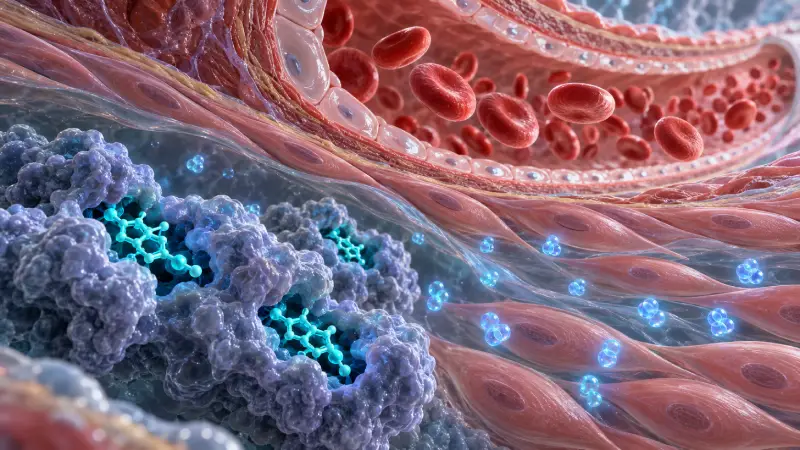
Pharmacologically, this medicine is categorised as a potent and selective cGMP-specific PDE5 inhibitor, functioning by way of a clearly established biological mechanism. During sexual arousal, local neuronal mechanisms trigger the release of nitric oxide (NO) into the penile corpus cavernosum. Guanylate cyclase, an enzyme that drives the synthesis of cyclic guanosine monophosphate (cGMP), is activated as a consequence. Elevated cGMP induces vascular smooth muscle relaxation, allowing increased arterial blood flow into erectile tissues.
The PDE5 enzyme normally degrades cGMP in the penile vasculature. Sildenafil Citrate selectively inhibits PDE5, preserving intra-cavernosal cGMP concentration. This action enhances the natural physiological erectogenic response. No direct relaxant effect on isolated human corpus cavernosum is produced by Sildenafil Citrate, meaning physiological sexual stimulation is strictly required for it to work.
Indications and When Doctors Prescribe It
According to the British National Formulary (BNF) and NICE guidelines, Sildenafil Citrate is indicated for:
- Erectile Dysfunction (ED) is the persistent inability of adult men to attain or maintain an adequate penile erection for satisfactory sexual performance.
Clinical Decision-Making
UK prescribers recommend Sildenafil Citrate as a primary pharmacological treatment option. A clinician evaluates underlying physiological factors such as cardiovascular health, diabetes, or neurological conditions as well as psychogenic causes before selecting a specific dosage. Therapy typically starts at 50mg and is subsequently adjusted based on efficacy, age, hepatic or renal clearance, and patient tolerability.
Dosage Guidelines and Administration
Sildenafil Citrate is administered orally.
The standard dosing guidance for adult men includes:
Standard Adult Dosing Overview
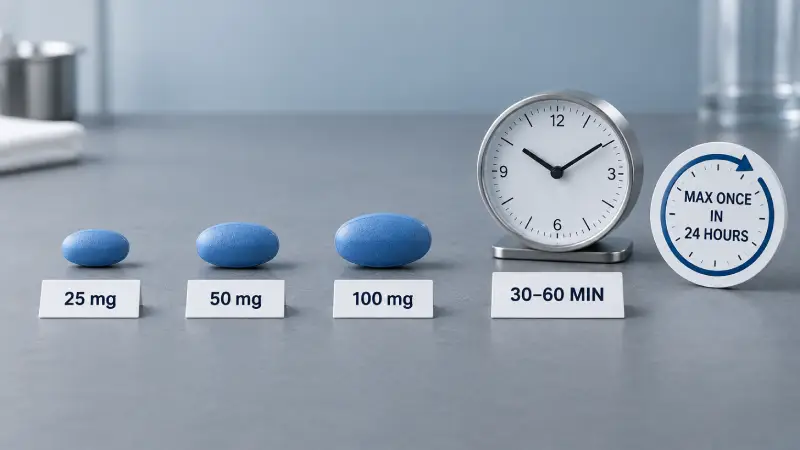
- Standard Starting Dose: Approximately one hour, or 30 to 60 minutes, before planned sexual activity, 50mg should be taken.
- Dose Titration: The dose may be reduced to 25mg or increased to a maximum of 100mg, depending on individual efficacy and side-effect profile. Maximum Frequency: once per day, meaning one dose within any 24-hour period, is the maximum recommended dosing frequency.
Administration Instructions
The tablet is to be taken whole, swallowed down with a glass of water. With or without food, Sildenafil Citrate can be taken, although a heavy or high-fat meal alongside it may delay the onset of action. For this treatment to produce an erection, sexual stimulation is required.
Warning: Never alter your dose without consulting your prescribing doctor or pharmacist.
Possible Side Effects and Safety Warnings
Mild to moderate and transient in nature, most side effects associated with Sildenafil Citrate can be described this way.
| Category | Details |
|---|---|
| Common Side Effects (Affecting up to 1 in 10 patients) | Facial flushing and skin redness |
| Headaches | |
| Dyspepsia (indigestion) or gastrointestinal discomfort | |
| Nasal congestion or runny nose | |
| Dizziness | |
| Visual disturbances (e.g., cyanopsia/blue-tinged vision, blurred vision) | |
| Serious Side Effects (require immediate emergency medical attention) | Priapism: a prolonged and painful erection lasting longer than 4 hours; unattended priapism can cause permanent erectile tissue damage |
| Sudden Vision Loss: clinically termed non-arteritic anterior ischaemic optic neuropathy (NAION) | |
| Sudden Hearing Loss: rapid reduction or complete loss of hearing, often accompanied by tinnitus or dizziness | |
| Cardiovascular Events: chest pain, palpitations, unstable angina, or severe lightheadedness | |
| Severe Hypersensitivity: anaphylactic reactions, angioedema, or widespread skin rashes |
MHRA Yellow Card Scheme
Should any adverse drug reactions be experienced, these should be reported directly via the MHRA Yellow Card Scheme (yellowcard.mhra.gov.uk). Reporting side effects helps collect ongoing safety data for UK medicines.
Drug Interactions and Precautions
Key Contraindications and Precautions
- Nitrates and Nitric Oxide Donors: Absolute contraindication. A severe, life-threatening drop in systemic blood pressure can be caused when Sildenafil Citrate is co-administered with nitrates, such as glyceryl trinitrate or isosorbide mononitrate, or with recreational “poppers” (amyl nitrite).
- Cardiovascular Status: Not recommended in patients with severe cardiac impairment, recent stroke or myocardial infarction (within the last 6 months), unstable angina, or severe hypotension (<90/50 mmHg).
- Hepatic and Renal Impairment: Where severe hepatic impairment or severe renal insufficiency, meaning creatinine clearance below 30 mL/min, is present, a reduced starting dose of 25mg is required.
- Hereditary Retinal Disorders: This medicine should be avoided altogether by those with a known hereditary degenerative retinal condition, including retinitis pigmentosa.
Known Drug Interactions
- Alpha-Blockers (e.g., Tamsulosin, Doxazosin): May cause symptomatic hypotension; patients should be clinically stable on alpha-blocker therapy before initiating Sildenafil Citrate at a 25mg starting dose.
- CYP3A4 Inhibitors (e.g., Ketoconazole, Erythromycin, Ritonavir): Impair sildenafil metabolism, resulting in increased plasma concentrations. Co-prescribing requires conservative dosing (25mg).
- Alcohol: Excessive alcohol intake impairs erectile performance and amplifies vasodilatory side effects such as orthostatic dizziness.
How to Access Sildenafil Citrate Safely in the UK
In the UK, Sildenafil Citrate is classified as a Prescription-Only Medicine (POM) in its standard 25mg, 50mg, and 100mg formulations. It is also available as a Pharmacy (P) medicine in specific 50mg preparations (such as Viagra Connect or generic Sildenafil 50mg P-lines) following a consultation with a registered pharmacist.
Regulated Access Pathway
- Clinical Assessment: Complete an online health assessment questionnaire or visit your GP / prescribing pharmacist.
- Medical Consultation: A registered UK prescriber or clinical pharmacist reviews your medical history, cardiovascular health, and current medications.
- Regulated Dispensing: Once approved, your prescription is safely dispensed and dispatched by a GPhC-registered UK pharmacy.
Frequently Asked Questions
Q: What does sildenafil citrate do?
A: Sildenafil citrate is a PDE5 inhibitor medicine. Consequently, relaxed blood vessels lead to an increase in blood flow reaching penile tissue. This action helps men achieve and maintain erections during sexual stimulation.
Q: How long does sildenafil citrate take to work?
A: Usually taking effect within 30 to 60 minutes, Sildenafil Citrate is absorbed more quickly when taken on an empty stomach, whereas heavy or high-fat meals can delay its clinical effect.
Q: Can I consume alcohol while taking sildenafil citrate?
A: It is advisable to avoid or strictly limit alcohol consumption. The physiological ability to achieve an erection is reduced by alcohol, which also increases the risk of vasodilatory side effects such as headaches and orthostatic dizziness.
Authoritative References
- NHS Health A-Z: Sildenafil (Viagra): Uses, Dosage, Side Effects and Precautions. Available at: https://www.nhs.uk
- MHRA Yellow Card Scheme: Adverse Drug Reaction Reporting Portal. Available at: https://yellowcard.mhra.gov.uk
Conclusion
Sildenafil Citrate offers a clinically proven, bioequivalent option for managing erectile dysfunction by improving vascular blood flow during sexual stimulation. Because it is a Prescription-Only Medicine (POM) subject to strict safety frameworks, always complete a formal clinical assessment through a healthcare professional before starting or modifying any treatment plan.
Medical Disclaimer
This Patient Information and Treatment Guide is generated strictly for educational and informational purposes and does not constitute formal medical advice, clinical diagnosis, or treatment recommendations. Intended purely to inform, this piece is not designed to take the place of guidance from a medical professional. Always consult a registered healthcare professional before starting or changing any treatment.